
 Business License
Blog Categories

Weathering Steel vs Painted Carbon Steel: Lifecycle Corrosion Protection & Maintenance Cost Analysis
The weathering steel vs painted steel decision is usually presented as a material choice, but it is really a maintenance strategy choice. One approach pays more at the steel mill and less over the following decades. The other pays less up front and commits the owner to a repainting cycle that continues for the life of the structure.
Which strategy wins depends on the environment, the access cost for maintenance, and the service life the owner actually expects. This article sets out the cost structure on both sides, explains what unpainted steel maintenance still involves, and identifies the conditions under which the comparison stops being close.
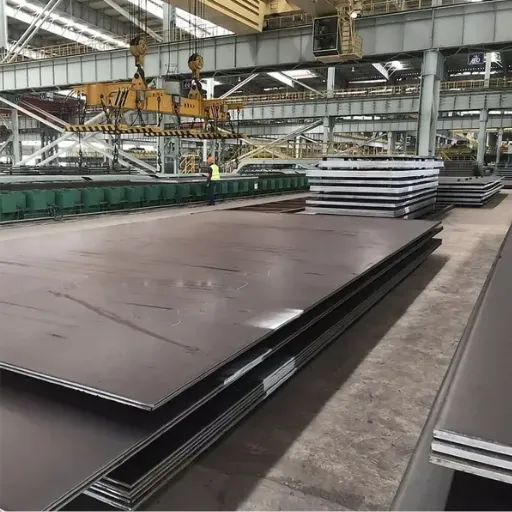
1. Two Approaches to the Same Problem
Both solutions address the same physical problem: carbon steel corrodes when water and oxygen reach the surface. The difference lies in where the barrier sits. A coated structure places an external barrier over ordinary steel. A weathering steel structure changes the chemistry of the steel so that the corrosion product itself becomes the barrier.
That structural difference drives everything downstream. A coating can be inspected, repaired, and renewed, and its condition is visible. A patina cannot be renewed in the same way, and its performance is inferred from the environment and from periodic thickness measurement rather than from surface appearance alone.
Both approaches are legitimate engineering choices. The mistake is to compare them on material price alone, because the two systems spend their money at different points in the asset life and at very different orders of magnitude.
2. How Each System Protects the Steel
A paint or coating system works by excluding water and oxygen. It is a barrier, and its protection ends where the barrier fails. That is why coating specifications focus on surface preparation, dry film thickness, and the number of coats: the durability of the system is set mainly by how well it is applied, not by the steel beneath it.
Coatings fail predictably. Blistering, undercutting at edges, mechanical damage during service, and chalking all appear at different rates, and each of them creates a path for water to reach the steel. Corrosion then concentrates at the failure rather than spreading evenly, which is why coating maintenance is a recurring activity rather than a single event.
Weathering steel works in the opposite way. It does not exclude water; it uses cycles of wetting and drying to build a compact oxide layer that slows the reaction. Protection improves with exposure, provided the surface dries between wetting events and the atmosphere is not aggressive toward the alloying elements.
| Aspect | Painted Carbon Steel | Weathering Steel |
|---|---|---|
| Protection mechanism | External barrier coating | Self-forming oxide layer |
| Maintenance type | Periodic repainting | Inspection and thickness measurement |
| Failure mode | Local breakdown at coating defects | Failure to stabilise in unsuitable exposure |
| Appearance control | Colour and gloss selectable | Brown patina, varies by exposure |
| Repairability | Local repair possible | Local repair limited |
3. Weathering Steel vs Painted Steel: Initial Cost
On first cost, the weathering steel vs painted steel comparison favours neither side consistently. Weathering grades carry a material premium over plain structural steel, typically a modest percentage, and that premium is offset by the absence of blast cleaning, priming, and finish coating.
The offset depends on the coating specification. A simple shop primer over blast cleaned steel costs relatively little, and the weathering premium may exceed it. A full multi-coat system with a high build epoxy and a polyurethane finish, applied under controlled shop conditions and touched up on site, costs considerably more and usually pushes first cost in favour of the weathering option.
Access cost at the construction stage matters as much as the coating price. Painting work that has to be done at height, over water, or during a short weather window carries a large labour multiplier. On bridges and towers, that multiplier is often what decides the initial comparison before the maintenance argument is even considered.
4. Lifecycle Coating Cost: Preparation, Application and Repainting
Lifecycle coating cost is dominated by the repainting cycle rather than by the first application. A typical protective system in a moderate environment needs partial maintenance within roughly ten to fifteen years and a full renewal somewhere beyond twenty, with the intervals shortening as the coating ages.
The cost of each intervention is not the paint. Surface preparation, containment, access, and the labour to apply the material under suitable conditions together account for the majority of the expenditure. Preparation also escalates over time, because a coating that has degraded to the substrate requires more extensive cleaning than one caught early. Any lifecycle coating cost model that ignores preparation scope therefore understates the later interventions.
Discounting matters when these figures are compared with a material premium paid today. A premium of a few percent on the steel is paid once, at the start. The avoided repainting cost arrives twenty or thirty years later, and its present value depends on the discount rate the owner applies. Public infrastructure owners often use a low rate, which favours the unpainted option, while commercial owners using a higher rate may find the comparison much closer.
5. Unpainted Steel Maintenance: What Still Costs Money
Unpainted steel maintenance is not zero, and treating it as zero is the most common error in the comparison. A weathering steel structure still needs inspection, and the inspection has a specific purpose: confirming that the patina has stabilised and that thickness loss is within the design allowance.
Inspection usually combines visual assessment with ultrasonic thickness measurement at defined locations. The locations are chosen where water is likely to collect or where runoff is slow, because those are the areas where the patina is least protective. Records from previous inspections allow the loss rate to be tracked and compared with the design assumption. Yansheng Tech supplies the base material with certificates that support that tracking, because the starting thickness has to be documented as carefully as the final one.
Other recurring items include cleaning of drainage paths, removal of debris that blocks water from leaving a surface, and treatment of any repairs made during the life of the structure. Repair welds and replacement plates will not have a developed patina, so they weather differently from the surrounding material and often attract attention in inspection reports even when the loss is negligible.
6. Service Life Assumptions Behind the Comparison
The comparison only works if both options are evaluated against the same service life. A weathering steel structure designed for fifty years with a corrosion allowance is being compared with a coated structure that would need several repainting cycles over the same period. A weathering steel vs painted steel comparison run on two different life assumptions is not a comparison at all. Shortening the assumed life to twenty years changes the answer, because the first repainting cycle may then fall outside the assessment.
Owners also need to state what happens at the end of the assumed life. If the expectation is that the structure will be replaced, a shorter life assumption is reasonable. If the expectation is that it will be maintained indefinitely, the repainting cycle continues and its present value grows with every additional decade.
A third assumption is less obvious and often decisive. An unpainted design assumes that the patina stabilises early and that the environment remains as assessed. Where industrial emissions or de-icing practice change over the life of the structure, the corrosion rate can rise, and there is no coating to renew because none was applied.
Specifying a slightly larger corrosion allowance is the usual protection against that uncertainty. That allowance is the insurance premium paid in place of the lifecycle coating cost.
7. Where the Comparison Breaks Down
The unpainted option loses its advantage in three environments. The first is permanent wetness, where surfaces cannot dry and the oxide layer never becomes protective. The second is chloride exposure, whether from sea spray or from de-icing salt, because chloride disrupts the oxide structure and keeps the corrosion rate high.
The third is a heavily polluted atmosphere with high sulphur dioxide levels, where the acidity of the surface water interferes with patina formation. Published guidance sets exposure categories for each of these cases, and the same grade appears in the acceptable list for some categories and the unacceptable list for others. The company reviews the exposure category against the grade before quoting, because the answer changes the system that should be recommended.
Where any of these conditions applies, the honest comparison becomes a coated weathering steel against a coated carbon steel, and the argument reduces to whether the additional alloy content justifies its cost in a coated system. In most cases it does not, and plain carbon steel with a suitable coating is the more economical answer. That outcome removes unpainted steel maintenance from the plan entirely.
8. Detailing and Specification Differences
Fabrication detailing changes between the two options. Painted steel must avoid sharp edges and crevices that thin a coating, and it needs drainage so that water does not stand on a painted surface. Weathering steel must also drain, but for a different reason: standing water prevents the patina from forming rather than breaking down a film.
Weathering steel also needs attention at connections and at the interface with other materials. Bolted connections should be detailed so that water does not collect in the gap, and where weathering steel meets concrete or masonry, the runoff should be directed away from the porous material. Stainless or galvanized fasteners are common where a long service life is expected.
Specification language differs as well. A coated structure is specified by the coating system, with dry film thickness and surface preparation standards written into the paint specification. An unpainted structure is specified by grade chemistry plus a corrosion allowance, and the allowance has to be visible in the structural drawings rather than buried in a note. Wuxi Yansheng Technology Co., Ltd. issues the chemistry and the mechanical certificate together, so the allowance can be checked against the grade actually delivered.
9. Two Cases from Project Costing
A highway authority compared the two options for a 180 m overpass in a rural environment with moderate rainfall. The coated option used a four coat system applied in the shop with site touch up, and the assessment assumed two maintenance interventions over a fifty year life. The weathering option used an unpainted grade with a one millimetre corrosion allowance and a five year inspection cycle.
Our team supplied the tonnage for both cases so the material cost could be compared directly. The weathering option came out ahead on whole life cost by roughly 18 percent at a four percent discount rate, and the margin widened at a lower rate.
A second structure, a coastal footbridge, was specified with a coating regardless of grade, because the chloride exposure at the site ruled out an unpainted design. The comparison there reduced to the cost of the alloy addition against no benefit, and plain carbon steel was selected.
10. Frequently Asked Questions
10.1 Is weathering steel vs painted steel mainly a cost decision?
Cost drives it, but access and appearance often decide it first. Where maintenance access is expensive, the weathering steel vs painted steel comparison usually favours the unpainted option because the avoided cost sits in labour rather than material. Where a specific colour or a uniform appearance is required, the painted option is chosen regardless of the cost analysis.
10.2 What does lifecycle coating cost include besides paint?
Surface preparation, access equipment, containment for blasting and spraying, and the labour to apply the material. Those items typically exceed the paint cost several times over. Lifecycle coating cost assessments that count only material and application labour understate the true figure, and the omission is largest for structures that are difficult to access.
10.3 How much does unpainted steel maintenance really cost?
Less than a repainting programme, but not nothing. Unpainted steel maintenance consists of periodic inspection, ultrasonic thickness measurement at selected locations, clearing of drainage paths, and occasional local repair. On a well detailed structure in a suitable environment, the cost is a small fraction of a coating maintenance programme, and it is spread evenly rather than concentrated in repainting campaigns.
10.4 Can a weathering steel structure be repainted later if performance disappoints?
Yes, though the surface preparation differs from new steel because the loose oxide has to be removed first. Yansheng Technology supplies weathering grades in plate, coil, and bar with chemistry reported against the ordered standard. Where the environment is borderline, a common approach is to design the corrosion allowance as though the material will be left unpainted and keep the option of coating as a fallback.
Recently Posted
-
Shipbuilding Steel Plate Standards: ABS, DNV, LR, BV Grade Equivalents & Mechanical Testing Requirements
October 14, 2026Shipbuilding steel plate standards are written by classification societies rather than by a single international body, and each so Read More
 -
Alloy Steel Bar Standards: ASTM A322, A434, A29 — Chemical Composition Ranges & Mechanical Property Requirements
October 13, 2026Alloy steel bar standards are organised differently from plate and pipe specifications. The chemistry of a bar is defined by one d Read More
 -
Wear Plate Hardness and Abrasion Standards: ASTM G65, HBW vs HRC Conversion & Hardness Through-Thickness
October 13, 2026Hardness is the number most often quoted when wear plate is bought and the number least often verified after delivery. Two plates Read More
 -
Steel Rebar Standards Guide: ASTM A615 vs A706 vs BS 4449 vs GB/T 1499.2 — Grade, Dimension & Ductility Comparison
October 10, 2026Steel rebar standards are not interchangeable, and a project that treats them as equivalent can end up with reinforcement that mee Read More

Contact Us
Recommended Products
-
 EN 1.4006 410 Round Bar 15-150mm Martensitic Annealed Steam Turbine Blade BlankUS$ 1.5 - 1.8MOQ: 100 Kilograms
 -
Gas Distribution Lines Require C12200 Hard Temper Copper Pipe With Corrosion ResistanceUS$ 10 - 25MOQ: 100 Kilograms
-
DIN 1.4541 Stainless Sheet 4mm Pickled Finish Pipeline Pressure System Industrial Fabrication MaterialUS$ 1.6 - 2.6MOQ: 100 Kilograms
-
EN X6CrNiTi18-10 Stainless Plate 5mm Heat Exchanger Corrosion Resistant Industrial Equipment UseUS$ 1.75 - 2.5MOQ: 100 Kilograms
-
Copper Bonded Ground Rod 14.2mm x 2400mm Steel Core Earth Rod ASTM Standard for Electrical Grounding SystemUS$ 5 - 25MOQ: 100 Kilograms
-
DIN 1.4307 Stainless Steel Plate 5mm Pickled Finish Chemical Reactor Pressure Vessel Fabrication UseUS$ 1.85 - 4.15MOQ: 100 Kilograms
-
ASTM A276 416 Free-Machining Round Bar Dia 8-60mm Sulfurized High-Speed Auto-ScrewUS$ 1.65 - 1.85MOQ: 100 Kilograms
-
Nickel Alloy Strip Coil Tube Mill Feedstock Inconel 625 Incoloy 825 Welded Tube Raw MaterialUS$ 20 - 70MOQ: 100 Kilograms
-
JIS SUS329J4L Duplex Round Bar 25-80mm Chloride-Proof GCC Coastal InfrastructureUS$ 5.9 - 6.4MOQ: 100 Kilograms
-
JIS SUS303Se Round Bar Dia 8-50mm Selenium-Free-Cutting Auto-Lathe Optical HousingUS$ 3.6 - 3.9MOQ: 100 Kilograms
-
ASTM A564 630 17-4PH Round Bar Dia 20-100mm Condition H1025 Injection Mould InsertUS$ 4.9 - 5.4MOQ: 100 Kilograms
-
ASTM A276 304 Square Bar 6x6-100x100mm Cold Drawn Pickled Weld Frame ConstructionUS$ 1.65 - 2.85MOQ: 100 Kilograms
-
EN X2CrTi12 Stainless Plate 4mm Oxidation Resistant Vehicle Exhaust Industrial Fabrication UseUS$ 0.95 - 2.5MOQ: 100 Kilograms
-
Aluminium Round Tube Baby Crib Cot Bed Frame 6063 T5 Anodized Safety Diameter Wall Thickness FurnitureUS$ 2 - 5MOQ: 100 Kilograms
-
Welded Stainless Steel C Channel Bar 304 Grade Polished Surface for Architectural Decoration UseUS$ 1.65 - 2.85MOQ: 100 Kilograms
-
Round Aluminum Tubing Painting Easel Stand Leg 6063 T5 Anodized Lightweight Diameter Wall ThicknessUS$ 2 - 5MOQ: 100 Kilograms
-
Nickel Alloy Coil Strip Forging Billet Raw Material Inconel 718 Waspaloy Disc Forging StockUS$ 20 - 70MOQ: 100 Kilograms
-
Water Pump Motor Core Grade Non Oriented Silicon Steel Coil 50W470 Width 1000mm ASTM A683 StandardUS$ 0.5 - 1.5MOQ: 500 Kilograms
-
GOES Steel for Railway Electrification Transformer Networks 23Q110 High Efficiency Magnetic LaminationUS$ 0.5 - 4.5MOQ: 500 Kilograms
-
Silicon Steel for Wind Energy Power Conversion Transformers 30QG105 EN 10106 GOES Strip MaterialUS$ 0.5 - 4.5MOQ: 500 Kilograms